
What Should a Small-Business Website Actually Do?
Your website should do more than look good. Here are the five jobs a contractor or trade business website needs to do to turn visitors into real jobs.
- Author
- Run It Smarter
- Published
- Reading time
- 4 min read
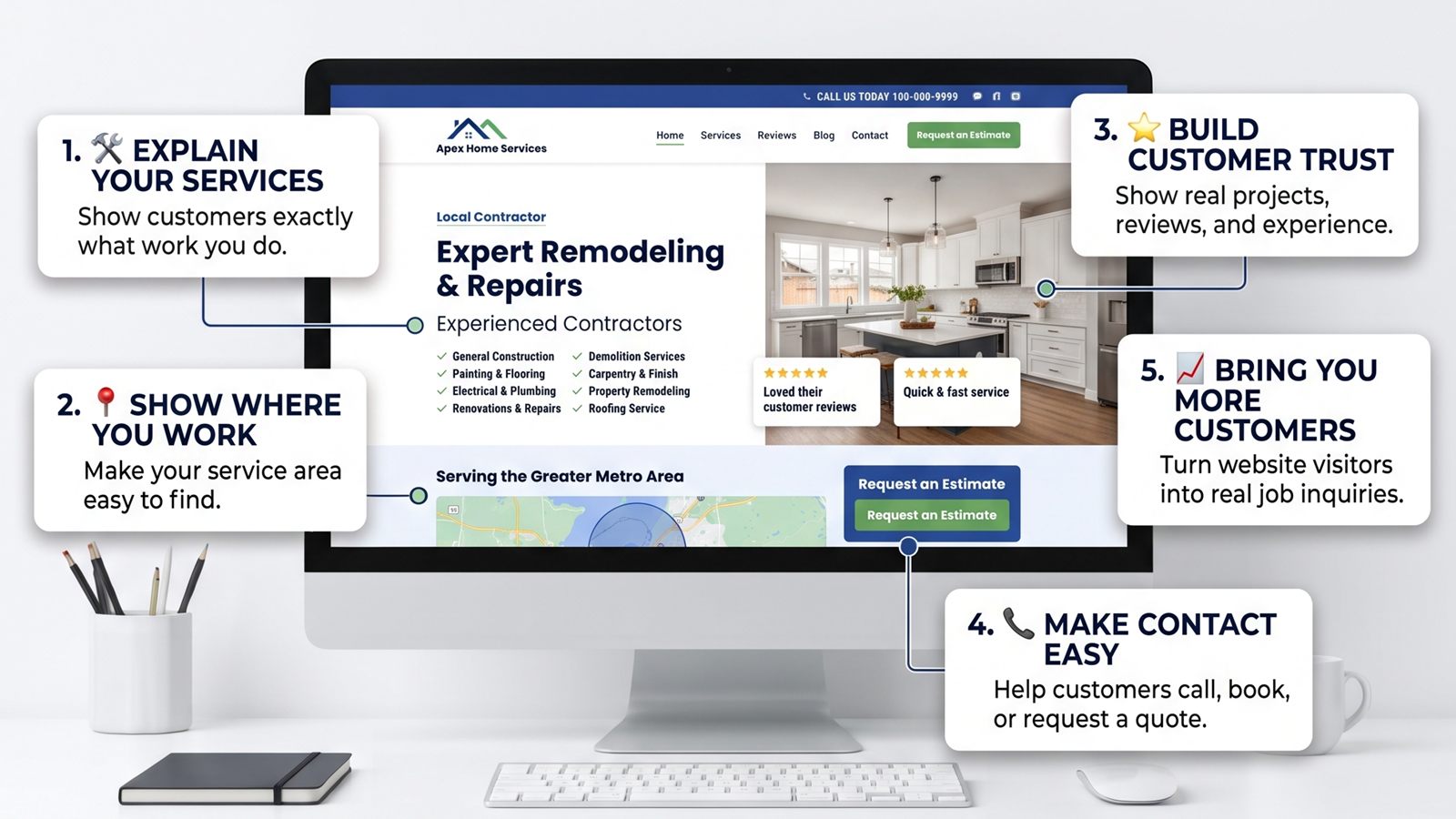
Short answer: a small-business website should help the right customers find you, understand what you do, trust you, and get in touch, ideally while you're busy working. Looking good helps, but it isn't the goal. The goal is turning a stranger who searched for help into a real inquiry.
For contractors and trade businesses, that comes down to five jobs.
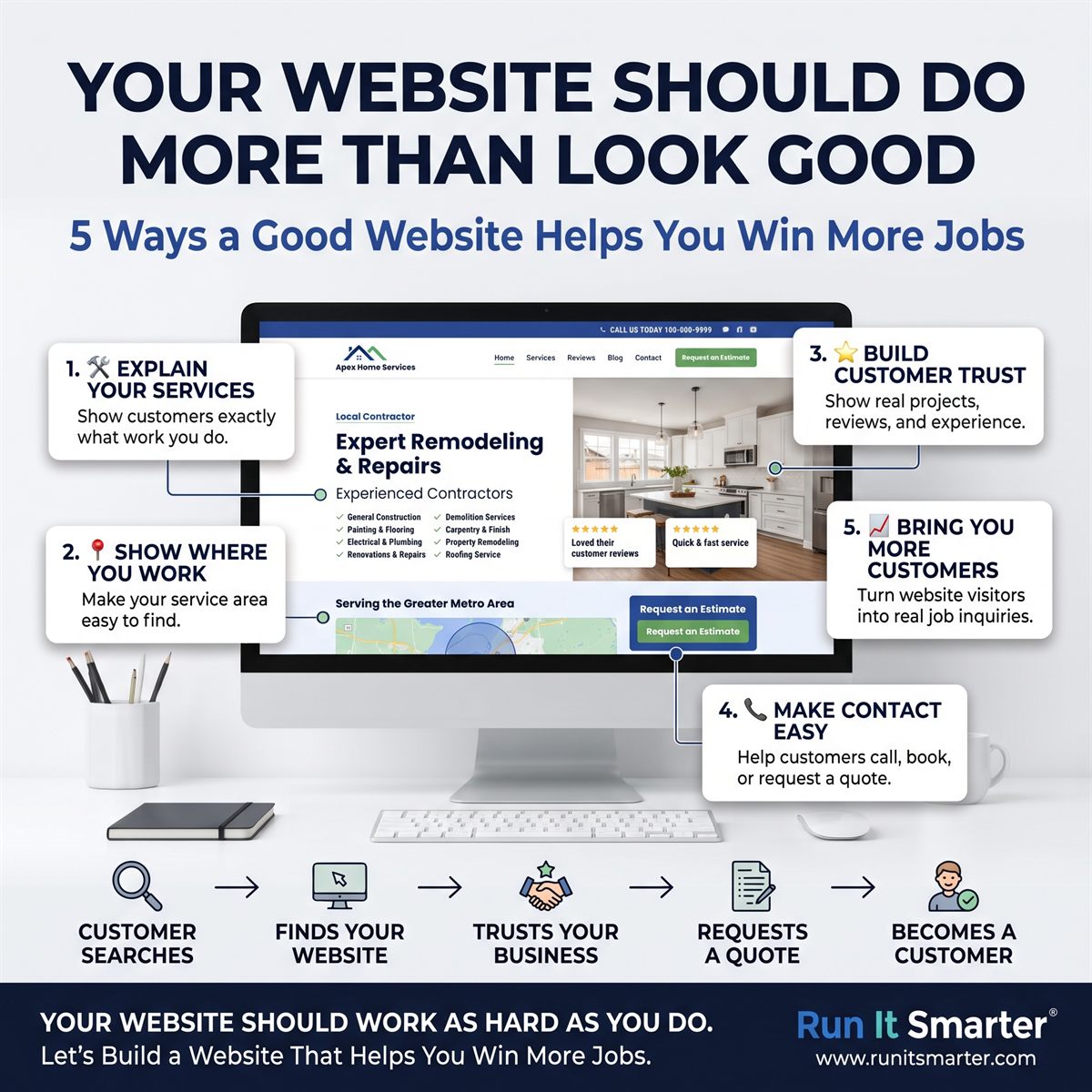
How it works: the path from search to job
Most new customers follow the same steps. They search for help, find your website, decide whether to trust you, and then request a quote or call. Each of the five jobs below supports one of those steps. If any one of them is missing, people drop off before they ever reach out.
1. Explain your services
Say clearly what work you do, whether that's plumbing, electrical, roofing, remodeling or HVAC. A visitor should be able to tell within a few seconds whether you handle their kind of job. A list of specific services also helps search engines match your site to what people are actually searching for.
2. Show where you work
List the cities and areas you serve. Someone with a leaking pipe needs to know straight away whether you can come to them. If your service area is hard to find, they'll go back to the search results and call someone who makes it obvious.
3. Build trust
Show real project photos, customer reviews and your experience. Let your work speak for itself. Photos of your own jobs carry more weight than stock images, because they show what a customer can actually expect.
4. Make contact easy
Give visitors simple ways to:
- Call your business
- Request a free estimate
- Schedule an appointment
These options should be easy to spot on every page, especially on a phone, where many people will first see your site.
5. Bring you more customers
Put the first four together and your website does its real job: turning visitors into inquiries and potential jobs, even when you're out on a site and can't answer the phone.
A good website works for your business, even when you're out on a job.
An example (hypothetical)
This is an illustrative scenario, not a real client.
Imagine a small roofing company. Its current site has a nice photo and a phone number at the bottom of the page, and nothing else. A homeowner in a nearby town finds the site after a storm, but can't tell whether the company works in their area or handles their kind of repair. They leave.
Now picture the same company with a clear list of services, a "Towns we serve" section, a few before-and-after photos of its own jobs with reviews next to them, and a "Request a free estimate" button at the top of every page. The same homeowner can answer every question they have in under a minute, and sends a request in the evening while the owner is at home. The owner sees it the next morning and calls back.
Same business, same visitor. The difference is whether the website did its job.
Tradeoffs and limitations
A website is a tool, not a guarantee. A few things to keep in mind:
- It won't bring traffic on its own. People still need to find it, usually through search, your Google Business Profile, referrals or ads. A clear, well-structured site helps with search, but it's one part of the picture.
- Trust takes upkeep. Photos, reviews and service details need refreshing as your business changes. An out-of-date site can cost you trust instead of earning it.
- Inquiries need a response. An estimate form only helps if someone replies promptly. If requests sit unanswered for days, people move on to the next business. Think about who will follow up, and how quickly, before you add more ways to get in touch.
- Be honest with your content. Only show photos of your own work and reviews from real customers. Borrowed images or made-up claims can backfire.
When this may not be the right priority
If your calendar is already full through referrals and you can't take on more work, a simple page with your services, area and contact details may be all you need for now. And if you don't yet have a way to answer calls and requests reliably, it may be worth sorting that out before putting effort into bringing in more inquiries.
Your next step
Open your website on your phone and pretend you're a new customer. Can you tell, within a few seconds, what you do, where you work, why someone should trust you, and how to request an estimate? Any question you can't answer quickly is the first thing to fix.
Your website isn't just an online brochure. It's a tool that helps you get found, build trust and win more jobs.
Need a website that works harder for your business? Contact Run It Smarter to see how we can help, or start with our free AI visibility review to see how your current site looks to search engines.
Tags
- small business websites
- contractors
- trade businesses
- lead generation